 NexaGPU
NexaGPU
NexaGPU
Industrial AI is moving from experimental dashboards into demanding production environments. Robots inspect welds, cameras detect defects, and edge systems analyze vibration before a motor fails. These workloads require more than impressive benchmark scores. They require predictable latency, continuous availability, thermal control, and dependable hardware support.
Market evidence supports this shift. IDC’s Worldwide AI and Generative AI Spending Guide projects global AI investment will exceed $630 billion by 2028. The Stanford AI Index 2025 also reports that AI model training continues to demand rapidly increasing compute resources and energy. For factories, this creates a practical challenge: selecting hardware that performs under dust, heat, vibration, and restricted network conditions. A specialized industrial ai server manufacturer can combine GPU acceleration with ECC memory, redundant power, long product lifecycles, and validated edge integration. These details matter when a server controls inspection decisions beside a noisy production line.
The choice is not automatically simple. A general-purpose server may cost less initially. It may also create integration delays, thermal throttling, or uncertain replacement planning. Experience reveals the gaps. Buyers should examine real workload tests, operating-temperature data, remote-management features, firmware support, and spare-parts availability. Gartner and Deloitte research both indicate that many organizations struggle to move AI projects from pilots into reliable operational systems. That warning deserves attention. Industrial AI needs measurable value, not fashionable specifications. A capable manufacturer should explain trade-offs clearly, document performance honestly, and support deployment after delivery. No vendor gets everything right. Careful evaluation still reduces expensive surprises.
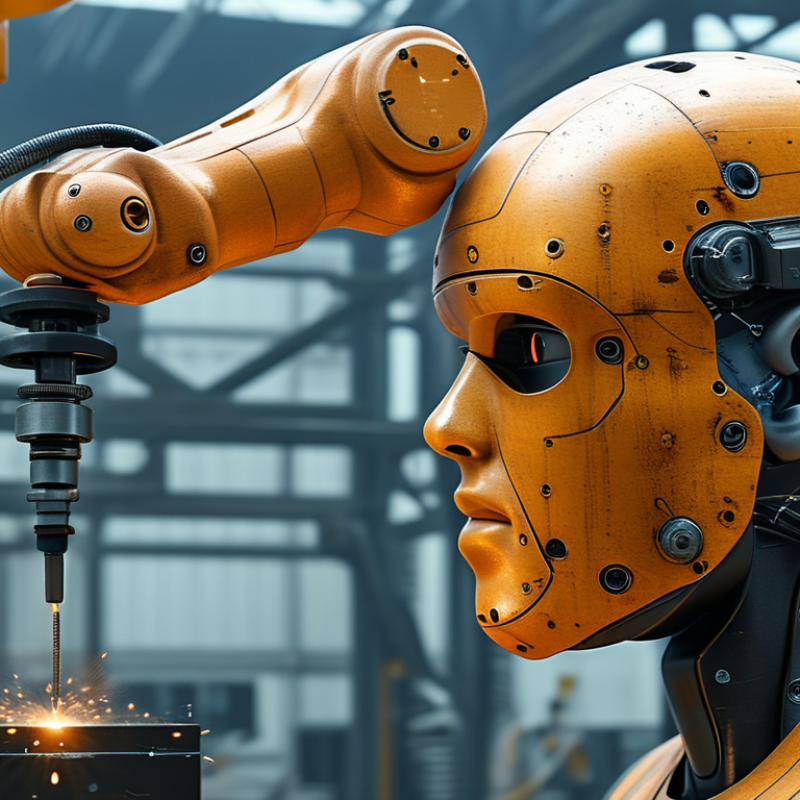
An industrial AI server manufacturer provides more than a rack-mounted computer. It helps businesses match processing power with real factory conditions. Engineers may inspect camera counts, sensor data, network limits, and operating temperatures before recommending a configuration. This practical review prevents expensive overcapacity and weak performance.
The manufacturer can supply rugged chassis, industrial-grade components, GPU acceleration, and flexible storage options. It may also design systems for dust, vibration, heat, and continuous operation. Thermal testing matters. A server that performs well in a showroom may throttle beside a furnace. Reliable manufacturers document these tests and explain their limits clearly.
Support continues after delivery. Installation guidance, firmware updates, spare-part planning, and remote diagnostics reduce production delays. In my experience, response time often matters more than impressive specifications. No design is perfect. A cooling plan may need revision after deployment, especially when workloads grow unexpectedly. Security reviews, power protection, and compatibility checks should remain part of the service, not optional extras. Clear records help technicians identify failures without guessing.
| Service or Capability | What the Manufacturer Provides | Industrial Value | Typical Technical Considerations |
|---|---|---|---|
| Application-Specific System Design | Server configurations tailored for machine vision, predictive maintenance, robotics, industrial analytics, or process control. | Helps align processing capacity, storage, networking, and expansion options with the intended workload. | CPU and accelerator selection, memory capacity, storage type, I/O requirements, and operating environment. |
| GPU and AI Accelerator Integration | Integration of suitable GPUs, inference accelerators, or other parallel-computing hardware with compatible power and cooling systems. | Supports training and low-latency inference for computer vision, deep learning, and other AI workloads. | PCIe resources, accelerator memory, thermal design power, driver support, and model-optimization compatibility. |
| Rugged Industrial Construction | Chassis and components designed for vibration, dust, temperature variation, and continuous-duty operation where applicable. | Improves suitability for factory floors, control rooms, transportation systems, energy sites, and other demanding locations. | Operating-temperature range, shock and vibration tolerance, ingress protection, mounting method, and component lifecycle. |
| Real-Time Edge Processing | Edge AI server platforms that process data near machines, sensors, cameras, or production equipment. | Reduces dependence on remote data centers and can support faster responses when network latency or connectivity is limited. | Inference latency, local data retention, network bandwidth, synchronization, and offline operation requirements. |
| Industrial Connectivity | Networking and I/O options for connecting cameras, sensors, programmable controllers, storage, and supervisory systems. | Enables data collection and AI analysis across production, inspection, maintenance, and operational systems. | Ethernet speed, serial interfaces, digital I/O, time-sensitive networking needs, protocol gateways, and cable layout. |
| Thermal and Power Management | Cooling solutions, airflow planning, power-supply sizing, and thermal monitoring for high-performance components. | Helps maintain stable performance and reduces the risk of thermal throttling or unplanned shutdowns. | Ambient temperature, airflow direction, fan redundancy, power quality, heat dissipation, and cabinet constraints. |
| Reliability and Redundancy | Options such as ECC memory, redundant power supplies, RAID storage, hot-swappable drives, and remote hardware monitoring. | Supports higher availability and simplifies maintenance in operations where downtime can interrupt production. | Single points of failure, recovery procedures, replacement time, data-protection policy, and serviceability. |
| Lifecycle Management | Long-term platform planning, component availability guidance, BIOS and firmware support, and configuration documentation. | Makes it easier to maintain consistent systems across multiple sites and reduce unexpected redesigns. | Product availability, approved component list, revision control, upgrade path, and software compatibility. |
| Security and Manageability | Hardware security features, secure boot options, access controls, firmware management, and out-of-band monitoring capabilities. | Helps protect industrial data and provides visibility into system health and administrative events. | Trusted-platform functions, role-based access, network segmentation, patch procedures, logging, and remote administration. |
| Validation and Testing | Configuration testing for thermal behavior, memory stability, storage performance, accelerator operation, and interface compatibility. | Reduces integration risk before deployment in production environments. | Burn-in testing, workload validation, environmental testing, compatibility checks, and acceptance criteria. |
| Technical Support and Customization | Pre-deployment consultation, system customization, documentation, troubleshooting, and after-sales technical assistance. | Provides a single technical point of coordination for hardware, software, deployment, and maintenance requirements. | Response process, spare-parts availability, service coverage, documentation quality, and escalation procedures. |
I server manufacturer provide?
It supports dust, vibration, heat, electrical interference, and continuous operation. Office assumptions may fail.
Engineers should inspect camera counts, sensor data, network limits, airflow, temperatures, and available cabinet space. Small details matter.
A server may throttle beside a furnace, even if it performs well in a showroom. Heat changes everything.
They can process machine vision, equipment monitoring, sensor analysis, and real-time quality inspection. Needs vary widely.
Local processing reduces network delays and avoids sending every image to a distant data center. Faster feedback helps.
It may include rugged chassis, powerful processors, accelerators, error-correcting memory, and flexible storage. More power creates more heat.
Support may include installation help, firmware updates, remote diagnostics, spare parts, and repair procedures. Response time often matters most.
Buyers should discuss heat, energy use, upgrade space, compatibility, service intervals, and component lifecycles. No design is perfect.
Choosing an industrial ai server manufacturer can provide more than powerful hardware. A specialized manufacturer typically delivers systems designed for demanding industrial environments, combining AI processing, reliable storage, thermal management, flexible connectivity, and long-term support. Unlike standard computing systems, industrial AI servers are built to operate continuously under conditions such as vibration, dust, temperature variation, and limited maintenance access. They can also be configured for real-time analytics, machine vision, automation, and other workloads that require stable performance and rapid response.
When evaluating an industrial ai server manufacturer, organizations should consider engineering expertise, customization capabilities, component quality, system testing, technical support, lifecycle management, and deployment experience. Manufacturing knowledge can improve reliability by ensuring that hardware, software, cooling, and integration requirements are addressed together rather than separately. A specialized manufacturer becomes especially important when a project involves harsh operating conditions, strict uptime expectations, edge AI processing, complex integration, or large-scale deployment. Selecting the right partner can reduce installation risks, simplify maintenance, and support consistent performance throughout the system’s operational life.
