NexaGPU NexaGPU

What Is a Deep Learning Server Manufacturer?

Time:2026-10-20 Author:Sophia
0%

A deep learning server manufacturer designs and builds the infrastructure that trains modern artificial intelligence models. Its work extends beyond assembling powerful computers. It combines GPUs, CPUs, memory, networking, storage, cooling, and software into a reliable system. Each part matters. A poorly balanced server can leave expensive GPUs waiting for data.

NVIDIA founder and CEO Jensen Huang described this shift clearly: “The data center is the new unit of computing.” His statement explains why manufacturers now engineer complete computing platforms, rather than selling isolated components. A capable deep learning server manufacturer studies model size, dataset movement, power limits, and customer workloads before recommending a configuration. For example, a research team may need eight GPUs, high-speed interconnects, and large shared storage. Another team may require fewer GPUs but stronger inference performance and quieter cooling.

Practical experience reveals uncomfortable details. A server can look impressive on paper and still disappoint in daily use. Fans may become distracting. Cable layouts may complicate maintenance. Software updates may interrupt experiments. These weaknesses deserve honest attention. No platform is perfect.

Trust also depends on testing and support. Qualified manufacturers validate thermal performance, GPU communication, firmware stability, and long-duration workloads. They should explain limitations instead of promising unlimited speed. Buyers should ask for benchmark conditions, warranty coverage, spare-part availability, and deployment references. Standards change quickly, too. A system suitable today may need expansion next year. Therefore, selecting a deep learning server manufacturer requires technical judgment, transparent evidence, and realistic expectations—not simply the highest GPU count.
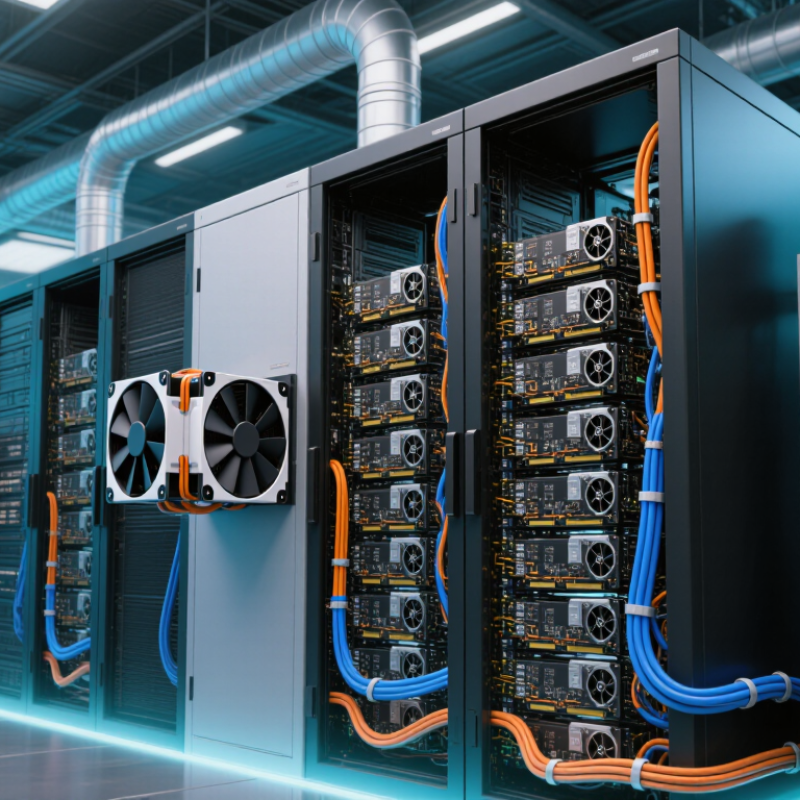
What Is a Deep Learning Server Manufacturer?

Definition and Role of a Deep Learning Server Manufacturer

A deep learning server manufacturer designs and builds computing systems for training and deploying neural networks. Its role extends beyond assembling hardware. It combines accelerators, CPUs, high-bandwidth memory, storage, networking, power delivery, and thermal control into one reliable platform. The definition is not perfectly tidy. Some manufacturers design every component, while others integrate certified parts from multiple suppliers.

Performance depends on balance. A server with powerful accelerators may still waste time when memory bandwidth, network latency, or cooling capacity becomes a bottleneck. Manufacturers therefore test communication between accelerators, measure sustained workloads, and validate firmware under extended operation. They also provide rack layouts, remote monitoring, replacement procedures, and technical support. These details matter in real data centers, where a small airflow problem can reduce performance or trigger shutdowns.

Market data explains this expanding responsibility. IDC’s Worldwide AI and Generative AI Spending Guide projects global AI infrastructure spending to reach about 153 billion dollars by 2027. The Stanford AI Index Report 2024 also recorded rapid growth in machine-learning model training costs and computing requirements. These figures show why server manufacturers increasingly support complete infrastructure planning, not only product sales. Yet published benchmark results can be selective. Buyers should question workload assumptions, power measurements, software versions, and cooling conditions before trusting a headline result. The best evaluation is often less impressive, but more repeatable.

Core Components of Deep Learning Servers

A deep learning server manufacturer designs systems for sustained, parallel computation. The core components determine real performance, not processor count alone. A modern server typically combines accelerator cards, high-core-count CPUs, fast memory, storage, networking, power delivery, and thermal control. Each part must work without creating a bottleneck.

Accelerators handle matrix operations, while CPUs prepare data and manage workloads. High-bandwidth memory keeps large models moving efficiently. NVMe storage reduces delays during dataset loading and checkpoint recovery. Fast interconnects matter when several servers train one model. The Stanford AI Index 2024 reports that training compute for notable models has doubled roughly every five months. This growth increases pressure on memory capacity, cooling, and power efficiency. The International Energy Agency estimates data centers consumed about 460 terawatt-hours globally in 2022, with demand potentially exceeding 1,000 terawatt-hours by 2026. These figures make thermal design a first-class component. It is easy to overlook. That is a costly mistake.

Tips: Check memory bandwidth before accelerator quantity. Measure network latency under real workloads. Require redundant power supplies and continuous temperature monitoring. Review benchmark results, but question laboratory conditions. A server may perform impressively for one test and disappoint during week-long training. I would not treat every specification as proof of reliability. Firmware quality, service access, and replacement time also shape ownership costs. The design is never perfect; workloads change, and yesterday’s balanced system can become tomorrow’s bottleneck.

How Deep Learning Servers Are Designed and Built

What Is a Deep Learning Server Manufacturer? How Deep Learning Servers Are Designed and Built

A deep learning server manufacturer builds systems for intensive model training and inference. The work involves more than installing powerful processors. Engineers balance accelerator density, memory bandwidth, networking, cooling, power delivery, and serviceability. Stanford’s AI Index 2024 reports that training compute for notable machine learning systems has doubled roughly every 3.4 months since 2010. That pace pressures manufacturers to design servers with faster upgrades and flexible expansion.

Inside a typical system, several accelerators connect to high-speed memory and low-latency fabric. A 4U chassis may contain multiple accelerator cards, redundant power supplies, and liquid-cooling channels. Thermal testing matters because uneven airflow can reduce performance before hardware fails. The International Energy Agency reported that data centers consumed about 460 TWh of electricity in 2022. It expects demand could exceed 1,000 TWh by 2026. Efficiency is not optional. Still, no design is perfect. Dense hardware improves computing capacity, but it can complicate maintenance, noise control, and future replacement.

Tips: Ask for measured performance, not only theoretical throughput. Check power use under sustained workloads. Confirm rack depth, cooling requirements, firmware support, and spare-part access. A short benchmark with your own models is more useful than a polished specification sheet. Small omissions become expensive later.

Key Technologies Used by Server Manufacturers

A deep learning server manufacturer builds systems for training and serving neural networks. Its work extends beyond assembling powerful processors. It must balance computing speed, energy use, thermal limits, and long-term reliability. In practice, a server can look impressive on paper yet perform poorly under sustained workloads. That gap matters.

Accelerator technology is central to modern systems. Graphics processors or dedicated AI accelerators handle parallel mathematical operations efficiently. High-bandwidth memory keeps large datasets moving with fewer delays. Fast interconnects allow several accelerators to communicate without creating a narrow bottleneck. These details affect training time directly. Small delays become expensive at scale.

Thermal engineering is equally important. Dense servers may use advanced air cooling or liquid cooling to control heat near processors. Sensors monitor temperature, power, and fan performance continuously. High-speed networking connects servers to shared storage, while solid-state drives reduce data loading delays. Manufacturers also provide firmware controls, virtualization support, and monitoring tools for safer operation. Security features protect system access and stored data. Reliability testing should include heavy workloads, repeated restarts, and component failures. A single successful benchmark proves very little. There is room for error. Engineers may overestimate cooling capacity or underestimate software complexity. Careful testing, transparent specifications, and responsive technical support help turn a fast machine into dependable infrastructure.

Industries and Applications of Deep Learning Servers

A deep learning server manufacturer designs high-performance systems for training and running artificial intelligence models. These servers combine powerful processors, accelerators, fast memory, and efficient cooling. Their importance becomes clearer across real industries, not just laboratories.

Healthcare teams use deep learning servers to analyze medical images and support clinical research. Manufacturers use them for defect detection, predictive maintenance, and production planning. In finance, these systems process market patterns, detect unusual transactions, and improve risk analysis. Retail companies apply them to demand forecasting, recommendation tools, and warehouse automation. Transportation operators use servers for route planning, traffic prediction, and autonomous system testing. In my experience, performance is rarely perfect. Data quality, model design, and cooling stability can limit results.

Tips:

Match server capacity with workload size. Check memory bandwidth, storage speed, and expansion options.

Test real datasets before purchasing. Power consumption matters too. A faster server may create higher operating costs.

Keep security controls, access management, and data protection in the design.

Smaller teams should begin with measurable projects. This approach reduces waste and exposes technical weaknesses early.

Manufacturer specifications can help, but independent testing remains valuable.

FAQS

What does a deep learning server manufacturer do?

It designs or integrates servers for training and deploying neural networks. Components include accelerators, CPUs, memory, storage, networking, cooling, and power systems.

Why does server balance matter?

Powerful accelerators can still wait for slow memory, networks, or storage. Cooling problems may reduce speed or cause unexpected shutdowns.

How do manufacturers test server reliability?

They measure sustained workloads, accelerator communication, firmware stability, and thermal performance. Testing should continue for extended periods, not just minutes.

Which industries use deep learning servers?

Healthcare analyzes medical images. Factories detect defects. Finance studies patterns. Retail forecasts demand. Transportation tests routes and traffic systems.

What should buyers check before purchasing?

Match capacity with real workloads. Check memory bandwidth, storage speed, expansion space, power use, and cooling requirements.

Are published benchmark results always reliable?

Not necessarily. Results may depend on software versions, selected workloads, power settings, or ideal cooling conditions. Repeat the test when possible.

Why should teams test their own datasets?

Real datasets reveal weaknesses that general benchmarks can hide. A small pilot can expose slow storage, poor data quality, or limited memory.

What security features belong in the design?

Use access controls, secure administration, and strong data protection. These details matter when servers process sensitive information.

Should smaller teams buy the most powerful server?

Usually not. Begin with measurable projects and realistic capacity. A faster system may create higher electricity and maintenance costs.

Is the definition of a manufacturer completely clear?

No. Some companies build major components themselves, while others integrate certified parts from several suppliers. The boundaries remain somewhat imperfect.

Conclusion

A deep learning server manufacturer is a company that designs, assembles, and supports specialized computing systems for training and deploying artificial intelligence models. Unlike general-purpose servers, these systems are built to process large volumes of data efficiently and support demanding parallel workloads. Their core components typically include high-performance processors, accelerator cards, fast memory, high-speed storage, advanced networking, reliable power systems, and efficient cooling solutions.

The design and manufacturing process involves balancing computing performance, energy efficiency, scalability, system stability, and long-term maintenance. Key technologies may include multi-accelerator communication, high-bandwidth data transfer, liquid or advanced air cooling, remote management, and optimized software integration. Deep learning servers are used across many industries, including healthcare, finance, manufacturing, transportation, scientific research, media, and public services. They support applications such as image analysis, language processing, predictive modeling, automation, simulation, and intelligent decision-making. A capable manufacturer therefore provides not only hardware, but also system configuration, testing, technical support, and flexible solutions for different workloads.

Sophia

Sophia

Sophia is a dedicated marketing professional with an exceptional depth of knowledge about her company's products and services. With a keen understanding of market trends and customer needs, she crafts insightful blog posts that not only inform but also engage readers, enriching the company’s online......