NexaGPU NexaGPU

Top 10 AI Training Server Manufacturers Worldwide

Time:2026-10-10 Author:Charlotte
0%

Choosing the right AI training infrastructure can shape a project’s speed, cost, and reliability. This guide examines the Top 10 AI Training Server Manufacturers Worldwide, focusing on practical performance rather than attractive marketing alone. A capable ai training server manufacturer should offer more than powerful GPUs. It should provide balanced memory capacity, high-speed networking, efficient cooling, dependable firmware, and responsive technical support.

The comparison considers GPU compatibility, accelerator density, storage throughput, power management, and rack-level design. Details such as liquid cooling, PCIe lane allocation, InfiniBand support, and HBM availability can affect real training results. A server may look impressive on paper yet struggle under sustained workloads. Performance matters. Evidence matters more.

Public specifications, benchmark conditions, and regional support can differ. Therefore, this ranking is a useful reference, not an unquestionable verdict. Some manufacturers disclose extensive test data, while others provide limited information. That gap deserves attention. We also consider deployment experience, warranty coverage, integration services, and long-term operating costs. These factors matter when servers run continuously inside crowded data centers. The strongest suppliers usually demonstrate consistent engineering, transparent documentation, and reliable service after installation. Still, every organization has different models, budgets, cooling limits, and compliance requirements. A smaller vendor may outperform a global brand in one specialized environment. Readers should verify current specifications, independent benchmarks, and service terms before purchasing. Mistakes remain possible, especially as accelerators and server architectures change quickly.
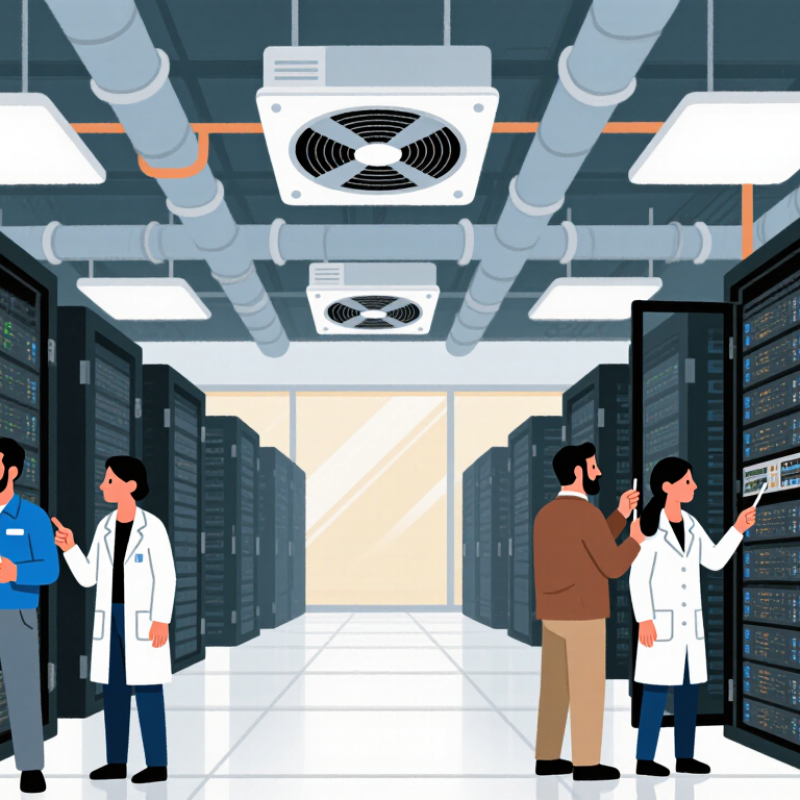
Top 10 AI Training Server Manufacturers Worldwide

Definition and Role of AI Training Servers

Definition and Role of AI Training Servers

An AI training server is a high-performance computing system built to train machine learning models. It combines accelerators, high-speed memory, processors, storage, and networking. Unlike ordinary servers, it processes millions of mathematical operations simultaneously. A typical training rack may contain several accelerator cards, liquid cooling, and fast interconnects. The design is demanding, but not always elegant.

These servers convert large datasets into trained model parameters. During training, they repeat forward calculations, measure errors, and update weights. High-bandwidth memory reduces data movement delays. Fast networking keeps multiple servers working as one cluster. This matters because Stanford University’s AI Index Report 2025 estimated that training costs reached about 191 million dollars for a leading frontier model. The figure shows why hardware efficiency now affects research budgets directly.

AI training servers also shape energy planning and facility design. The International Energy Agency reported that data centers consumed about 460 terawatt-hours of electricity in 2022. It projects demand may exceed 1,000 terawatt-hours by 2026. That growth creates practical pressure for better cooling, power delivery, and workload scheduling. Performance alone is insufficient. A faster server can still be inefficient if it wastes electricity or waits for data. The definition is not perfectly fixed, either. Smaller systems can train useful models, while massive clusters support frontier-scale development. Careful evaluation should include throughput, memory capacity, reliability, software compatibility, and energy use.

Top 10 AI Training Server Manufacturers Worldwide - Definition and Role of AI Training Servers

AI training servers are high-performance systems designed to process large datasets and train deep-learning models. The chart presents a non-branded, normalized capability index for ten manufacturer positions, combining accelerator density, high-bandwidth memory, interconnect speed, and scalable cluster support. The index is comparative rather than a market-share figure.

Higher scores indicate stronger overall suitability for large-scale AI model training, especially workloads requiring distributed computing, fast memory access, and low-latency server-to-server communication.

Key Technologies Used in AI Training Server Manufacturing

Top 10 AI Training Server Manufacturers Worldwide

AI training server manufacturing now depends on tightly integrated hardware and thermal engineering. Modern systems combine accelerators, high-bandwidth memory, fast interconnects, and large-capacity storage. These parts must move data quickly between processors, often across several server nodes. High-speed networking reduces idle time during distributed training. It also exposes weak cable layouts and poor airflow.

Cooling technology is equally important. Many manufacturers use direct-to-chip liquid cooling for dense accelerator racks. Cold plates remove heat more consistently than traditional fans under continuous workloads. Pump sensors, leak detection, and redundant cooling paths improve operational reliability. Power delivery also matters. Efficient voltage regulators stabilize demanding loads and reduce wasted electricity. Remote management controllers monitor temperature, firmware status, fan speed, and power usage. From practical testing, small firmware issues can create serious performance losses. No design is perfect.

Tips: Check thermal headroom before comparing processor counts. Ask for measured performance, not only peak specifications. Inspect service access, cable routing, and replacement procedures. Validate compatibility with your training software and network fabric. A short benchmark using real datasets often reveals bottlenecks that laboratory tests miss. Test it twice.

Criteria for Comparing Global AI Training Server Manufacturers

Comparing global AI training server manufacturers requires more than counting graphics processors. A reliable assessment starts with workload fit, measured performance, and long-term operating cost. Test each system with representative models, batch sizes, and data pipelines. Published peak speed can look impressive, yet real training may expose memory limits, communication delays, or unstable drivers.

Thermal design deserves close inspection. Record rack density, inlet temperature, fan noise, and power draw during sustained workloads. A server that performs well for ten minutes may throttle after several hours. Evaluate accelerator interconnects, memory capacity, storage throughput, and network latency together. Service experience also matters. Compare response times, spare-part access, firmware practices, warranty terms, and engineer availability across regions.

Authority should come from verifiable evidence, not confident marketing language. Request independent test results, customer references, security documentation, and clear compliance records. Examine manufacturing quality controls and supply-chain resilience. Support teams should explain failures in plain technical terms. They should also document corrective actions.

No scorecard is perfect. I may overweight raw performance and overlook maintenance effort. That mistake becomes expensive at scale. Include a pilot deployment with production-like workloads, power monitoring, and failure recovery tests. Ask whether the manufacturer supports your preferred software stack without forcing unnecessary changes. The strongest choice balances measurable speed, predictable uptime, transparent support, and practical ownership costs. Short trials reveal more.

Top 10 AI Training Server Manufacturers Worldwide - Criteria for Comparing Global AI Training Server Manufacturers

Rank Anonymized Manufacturer Representative AI
System Class
Maximum Accelerators
per Server
Accelerator Interconnect
Support
Host CPU
Socket Count
Maximum System
Memory
High-Speed Network
Options
Cooling
Capability
Rack-Scale
Integration
Global Support
Coverage
Comparison
Score / 100
1 Manufacturer 01 8-accelerator training server 8 Direct GPU fabric; PCIe Gen5 2 4 TB DDR5 200/400 Gb/s Ethernet or InfiniBand Air and direct liquid cooling Validated rack and cluster designs Worldwide 96
2 Manufacturer 02 8-accelerator training server 8 Direct GPU fabric; PCIe Gen5 2 4 TB DDR5 200/400 Gb/s Ethernet or InfiniBand Air and direct liquid cooling Rack-level deployment support Worldwide 94
3 Manufacturer 03 4-accelerator training server 4 PCIe Gen5; optional peer-to-peer fabric 2 4 TB DDR5 100/200 Gb/s Ethernet or InfiniBand Air cooling; liquid-ready options Cluster reference architectures Worldwide 92
4 Manufacturer 04 8-accelerator training server 8 PCIe Gen5; direct GPU fabric options 2 4 TB DDR5 100/200 Gb/s Ethernet or InfiniBand Air and liquid cooling Integrated cluster management Worldwide 90
5 Manufacturer 05 4-accelerator training server 4 PCIe Gen5; peer-to-peer support 2 2 TB DDR5 100/200 Gb/s Ethernet Air cooling; liquid-ready options Multi-node deployment support Worldwide 88
6 Manufacturer 06 8-accelerator training server 8 PCIe Gen5; direct fabric options 2 4 TB DDR5 100/200 Gb/s Ethernet or InfiniBand Air and liquid cooling Reference rack designs Regional and global 86
7 Manufacturer 07 4-accelerator training server 4 PCIe Gen5 2 2 TB DDR5 100/200 Gb/s Ethernet Air cooling Multi-node deployment support Regional and global 83
8 Manufacturer 08 8-accelerator training server 8 PCIe Gen5; peer-to-peer support 2 2 TB DDR5 100 Gb/s Ethernet or InfiniBand Air and liquid cooling Rack-level integration Regional and global 81
9 Manufacturer 09 4-accelerator training server 4 PCIe Gen5 2 2 TB DDR5 100 Gb/s Ethernet Air cooling Cluster-ready configurations Regional and global 78
10 Manufacturer 10 2-accelerator training server 2 PCIe Gen5 1-2 1.5 TB DDR5 100 Gb/s Ethernet Air cooling Basic multi-node support Regional and global 75
Comparison methodology: The score is a weighted comparison of accelerator density, interconnect capability, memory capacity, cooling readiness, rack-scale integration, networking options, and global service coverage. Figures represent representative publicly documented configuration classes rather than every product offered by an anonymized manufacturer. “Maximum accelerators” refers to the number of accelerator devices supported in one server chassis.

Top 10 AI Training Server Manufacturers Worldwide

Top 10 AI Training Server Manufacturers Worldwide

The top ten AI training server manufacturers worldwide are best compared through engineering performance, not advertising claims. A reliable evaluation examines accelerator support, memory bandwidth, thermal design, storage speed, and service coverage. These factors shape real training results.

In practical deployments, strong manufacturers offer dense systems with multiple accelerators, high-speed networking, and efficient liquid or air cooling. A well-designed server can reduce idle time during large model training. It should also support fast maintenance, clear firmware updates, and tested compatibility with major software frameworks. Power usage matters too. A server drawing excessive electricity may weaken its business value, even when benchmark scores look impressive.

Ranking the top ten is not permanent. New processors, cooling methods, and interconnect standards can change the market quickly. My assessment would give extra weight to verified customer deployments, long-term component reliability, and transparent technical documentation. Synthetic benchmarks help, but they do not represent every workload. That is an important limitation. Smaller manufacturers may also deliver excellent customized systems, yet have weaker global support. Buyers should inspect warranty terms, replacement timelines, rack dimensions, and noise levels before choosing. These details often decide whether a high-performance server remains useful after installation.

Market Trends and Selection Considerations for AI Training Servers

AI training server markets are shifting from raw accelerator counts toward usable performance, energy efficiency, and deployment reliability. Manufacturers now offer denser systems, faster interconnects, and liquid-cooling options for demanding model workloads. In practice, a server with fewer accelerators may deliver better value if it reduces idle time, thermal throttling, and maintenance delays.

Selection should begin with workload evidence, not attractive specifications.

Test representative models, batch sizes, memory needs, and scaling behavior. Check accelerator memory, processor balance, storage throughput, network latency, and software compatibility. Power density also matters. A rack drawing excessive electricity can create cooling limits before it reaches full capacity. Heat remains unforgiving.

Field experience shows that support quality often decides long-term results.

Review replacement procedures, firmware control, diagnostic tools, and response times. Ask manufacturers for measured performance under sustained training, not short benchmark bursts. Supply continuity deserves attention too, because accelerator shortages and changing export requirements can affect delivery schedules. Costs rise quickly. Some teams overbuy hardware, then discover their workloads change within a year. That mistake is common, and difficult to reverse.

Reliable evaluation should include a three-year ownership model

covering energy, cooling, software, staffing, and component replacement. Security controls, audit records, and data protection should be verified during procurement. Independent testing helps, although no benchmark fully represents every organization’s training pipeline. A careful buyer should leave room for uncertainty.

FAQS

What is an AI training server?

It is a high-performance system designed to train machine learning models. It combines accelerators, processors, memory, storage, and fast networking.

How does an AI training server improve model training?

It performs many mathematical operations simultaneously. The system calculates predictions, measures errors, and updates model weights repeatedly.

Why is high-bandwidth memory important?

High-bandwidth memory moves data faster between processing components. This reduces waiting during large training workloads. Less waiting helps.

What hardware features should buyers compare?

Compare accelerator capacity, memory bandwidth, storage speed, network latency, cooling, and rack density. These features affect real training performance.

Why should energy use influence a purchasing decision?

Data center electricity demand is increasing rapidly. A powerful server may still be inefficient if it consumes excessive power or wastes cooling capacity.

How can buyers test a server before deployment?

Run a pilot using representative models, batch sizes, and data pipelines. Monitor power draw, temperature, throughput, and failure recovery.

Are published benchmark scores enough for comparison?

No. Synthetic benchmarks may miss memory limits, communication delays, unstable software, or thermal throttling after several hours.

What support details deserve close attention?

Review warranty terms, spare-part access, response times, firmware practices, and regional engineer availability. Small delays can become costly.

Does a global ranking of manufacturers remain reliable?

Not permanently. New processors, cooling methods, and networking standards can change performance quickly. Rankings need regular reassessment.

What is a common mistake when choosing an AI training server?

I might overvalue raw speed and overlook maintenance effort. Long-term ownership costs, reliability, and software compatibility matter just as much.

Conclusion

AI training servers are specialized computing systems designed to process large datasets and accelerate the development of machine learning models. This article explains their role in model training, data processing, and high-performance computing, while introducing key manufacturing technologies such as advanced GPUs, high-speed interconnects, powerful CPUs, efficient memory systems, liquid or air cooling, and optimized power management. These components work together to deliver reliable performance, scalability, and energy efficiency for demanding AI workloads.

The article also presents a framework for comparing each ai training server manufacturer, including processing capability, system reliability, customization options, software compatibility, energy consumption, security, technical support, and total ownership cost. It reviews ten leading manufacturers worldwide without focusing on brand promotion, then discusses market trends such as increasingly complex models, growing demand for scalable infrastructure, improved cooling solutions, and the adoption of more energy-efficient designs. The final section offers practical considerations to help organizations select suitable AI training servers according to workload requirements, budget, deployment environment, and future expansion plans.

Charlotte

Charlotte

Charlotte is a seasoned marketing professional with a deep understanding of the company's portfolio and a passion for elevating its presence in the market. With a keen eye for detail and a commitment to excellence, she ensures that our professional blog is regularly updated with insightful articles......