 NexaGPU
NexaGPU
NexaGPU
Choosing an AI inference server manufacturer affects latency, uptime, operating cost, and long-term deployment flexibility. A polished product page cannot prove reliable performance. Real evidence comes from tested workloads, transparent specifications, and responsive technical support.
This guide examines seven practical tips for evaluating an ai inference server manufacturer. It considers GPU compatibility, thermal design, power efficiency, software integration, security practices, warranty coverage, and delivery capability. Ask for benchmark results using models similar to yours. A vision model and a language model can behave very differently under load.
Look closely at the details. Can the server sustain performance in a warm, crowded rack? Are replacement parts available in your region? Does the manufacturer explain firmware updates clearly? These questions often reveal more than impressive processor numbers.
Experience matters here. A supplier may offer excellent hardware but weak deployment guidance. Another may provide strong support but limited customization. Neither choice is automatically right. Your team should compare measured results, service commitments, and total ownership costs.
Small details matter.
Independent testing can strengthen your decision, especially when vendor claims seem unusually optimistic. Still, no checklist removes every risk. Workloads change, budgets tighten, and new accelerators appear quickly. A careful evaluation should leave room for revision, not false certainty.
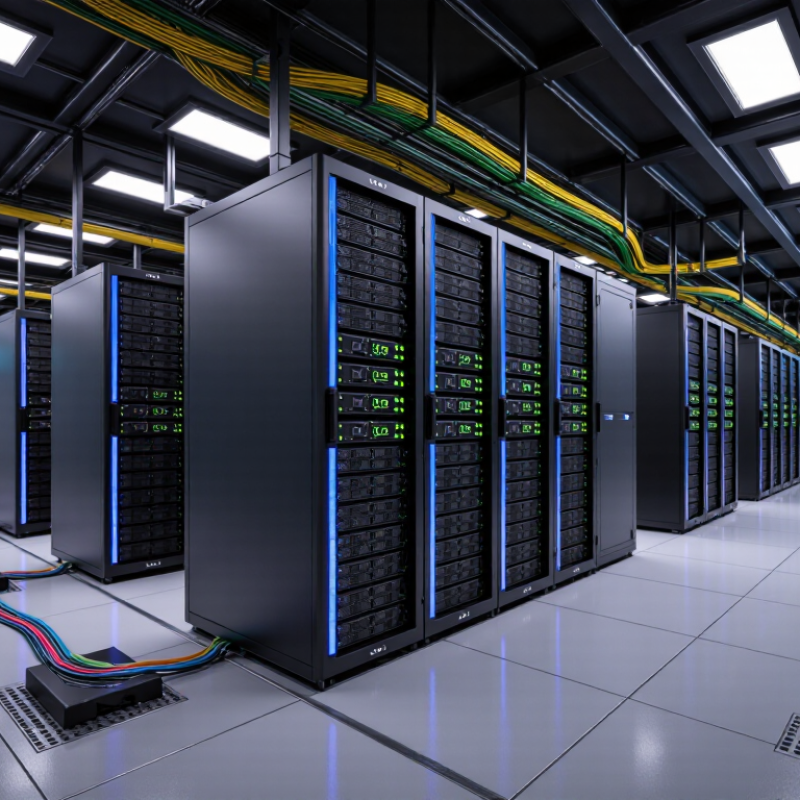
Choosing an AI inference server manufacturer begins with a precise workload definition. Identify model size, input context, output length, precision, concurrency, and expected requests per second. A chatbot serving 2,000 users needs different hardware from a vision system inspecting factory images. Latency matters. Measure time to first token, tokens per second, and p95 or p99 response times. Average latency can hide painful delays during traffic spikes.
Use repeatable tests with realistic prompts, not only vendor demonstrations. Include warm-up periods, mixed request lengths, batching behavior, and failure recovery. The Stanford AI Index 2025 reports that GPT-3.5-level inference costs fell over 280-fold between November 2022 and October 2024. Lower costs are valuable, but they do not guarantee stable production performance. I would question any result measured with one short prompt.
Power and cooling also belong in the workload calculation. The International Energy Agency reported that data centers consumed about 460 terawatt-hours of electricity in 2022, with demand potentially exceeding 1,000 terawatt-hours by 2026. Ask manufacturers for performance per watt, sustained throughput, noise levels, and thermal limits. Test your own model, especially after several hours of continuous operation. A server that wins a brief benchmark may disappoint overnight. Include capacity for model updates, security controls, maintenance access, and future traffic growth.
Request thermal tests, failure-rate records, and results from long deployments. Test the server in a warm rack under sustained workloads. Check component lifecycles, spare parts, and firmware update procedures. Short demonstrations prove little.
Look for secure boot, signed firmware, and controlled administrative access. Ask where diagnostic logs and customer data are stored. Request written vulnerability reporting and incident-handling procedures. Vague promises are warning signs.
Confirm response times, escalation paths, remote troubleshooting, and local replacement options. Ask technical questions before signing a contract. A helpful support team should explain problems clearly. Support quality can vary.
Review deployment guides, benchmark methods, and workload-specific recommendations. Experienced engineers discuss memory bandwidth, cooling limits, and software compatibility. They should explain bottlenecks without hiding limitations. Honesty is useful.
Use real models, real traffic, and realistic power conditions. Measure latency, batch behavior, recovery time, and performance per watt. Your workload may differ sharply from published benchmarks. Test it yourself.
Include accelerators, memory, networking, electricity, cooling, software, support, and replacement parts. A cheaper server may consume more power every hour. Also estimate firmware support and repair costs. Forecasts can be wrong.
Check component availability, production locations, lead times, and allocation policies. Request written delivery milestones and spare-unit commitments. Confirm facility power, rack space, and cooling readiness. Schedules often slip.
Ask about upgrade paths, warranty response, onsite coverage, repair inventory, and resale assumptions. Compare expected performance with future software requirements. Review failure data and service metrics before committing. I would not trust a five-year forecast completely.
Choosing the right ai inference server manufacturer requires a clear understanding of your specific workload and performance goals. Begin by identifying model types, response-time targets, throughput needs, and expected user volume. Then compare hardware architecture, accelerator options, memory capacity, networking, and scalability to ensure the server can support both current demands and future growth. It is equally important to assess software compatibility, deployment tools, monitoring capabilities, and how easily the system integrates with your existing infrastructure.
Beyond technical specifications, evaluate reliability, security controls, maintenance services, warranty coverage, and the manufacturer’s experience with similar applications. Ask about testing procedures, component quality, technical support, and replacement timelines. Finally, review the total cost of ownership, including energy consumption, licensing, upgrades, delivery capacity, and long-term operational value. A strong decision should balance performance, flexibility, service quality, and predictable costs rather than focusing only on the initial purchase price.
