 NexaGPU
NexaGPU
NexaGPU
China’s AI hardware sector is entering a demanding phase in 2026. Large language models, industrial vision, and scientific workloads require dense, reliable computing infrastructure. A capable ai computing server manufacturer must deliver more than powerful processors. It must balance accelerator compatibility, memory bandwidth, cooling design, network performance, and long-term service.
This overview examines ten leading Chinese manufacturers through practical criteria. These include server architecture, production capacity, data-center integration, technical support, and documented deployment experience. Attention also goes to GPU and accelerator options, liquid-cooling readiness, rack density, and power efficiency. A modern server room makes these details visible: fiber cables run between racks, cooling loops manage rising heat, and monitoring systems track hardware performance continuously. Small design choices can affect uptime and operating costs.
Market information is not always consistent. Some companies disclose detailed benchmarks, while others emphasize partnerships or project announcements. Rankings therefore reflect available evidence, not an absolute judgment. That limitation deserves attention. Real-world results may differ across cloud platforms, hospitals, laboratories, and manufacturing plants. Vendor claims should be checked against independent tests, customer references, warranty terms, and after-sales response times.
The manufacturers discussed here represent different strengths. Some focus on enterprise integration, while others specialize in high-density computing or customized deployments. Their progress also reveals China’s broader effort to build resilient AI infrastructure. Yet performance alone is not enough. Reliable delivery, transparent documentation, upgrade flexibility, and responsible energy management will shape which companies remain competitive. This guide offers a practical starting point for buyers, engineers, and technology decision-makers evaluating China’s top AI computing server manufacturers in 2026.
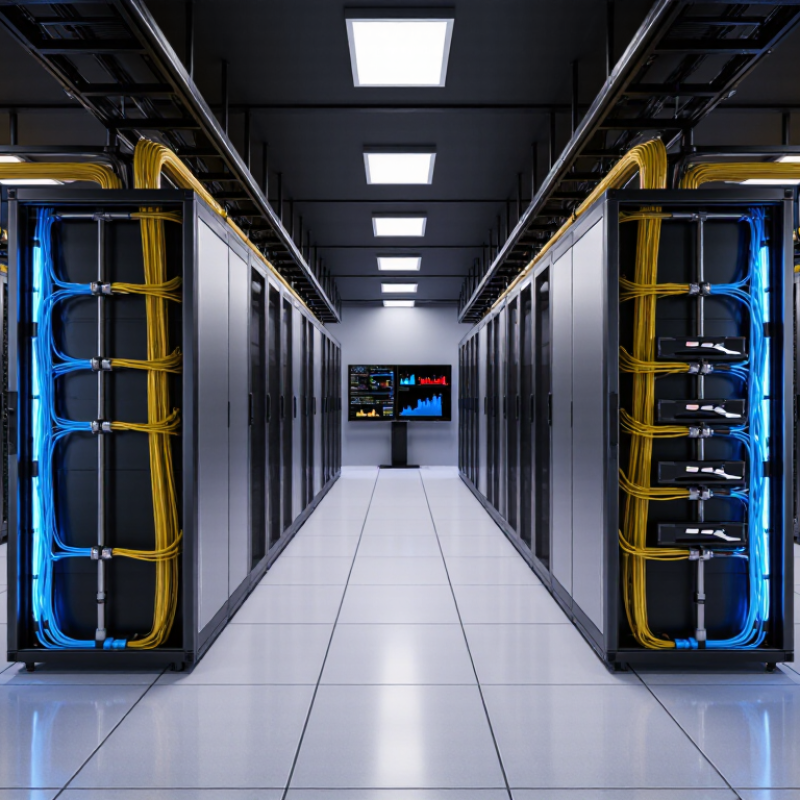
China’s AI computing server market in 2026 is shifting from rapid expansion toward practical deployment. Demand comes from public cloud, research centers, financial modeling, industrial vision, and smart manufacturing. A credible top-ten manufacturer list should examine more than shipment volume. It should compare accelerator compatibility, liquid-cooling readiness, supply stability, service coverage, and long-term operating costs. Local procurement teams now study performance per watt, not only headline computing speed.
Tips: Check real workload results. Ask for rack-level power data. Confirm replacement-part timelines. Review cooling requirements before signing contracts.
Many manufacturers are developing dense systems for large language models and scientific computing. Others focus on modular servers for smaller enterprises. Domestic component availability can improve delivery confidence, although some advanced parts remain exposed to changing trade conditions. This makes technical planning more careful. It also makes the market less predictable than sales charts suggest.
In 2026, buyers increasingly value deployment experience. A server that performs well in a laboratory may struggle inside a crowded data hall. Noise, heat, network latency, and maintenance access matter. So does software support. The strongest suppliers usually provide testing, cluster integration, monitoring tools, and trained engineers. Yet no ranking is perfect. Market data can be incomplete, and reported performance may reflect ideal conditions. Careful buyers should request independent benchmarks and inspect reference projects before choosing among China’s leading AI computing server manufacturers.
Demand comes from cloud services, research, financial modeling, industrial vision, and smart manufacturing. Practical deployment now matters more than rapid expansion.
Compare accelerator compatibility, memory bandwidth, cooling readiness, service coverage, supply stability, and operating costs. Do not rely on shipment volume alone.
Peak accelerator speed may not reflect real performance. Request training results, inference latency, power data, and sustained thermal tests.
Check airflow, rack density, noise, and heat output. Some systems use rear-door heat exchangers or direct liquid cooling.
Review factory capacity, component traceability, quality controls, and replacement-part timelines. Delivery confidence can improve with locally available components.
Useful support includes cluster integration, monitoring tools, firmware updates, fault alerts, and trained engineers. Maintenance access matters in crowded data halls.
Not necessarily. Energy, cooling, maintenance, software compatibility, and downtime can create larger expenses later.
No ranking is final. Testing conditions differ, service data may be incomplete, and reported results can show ideal conditions.
Ask for independent benchmarks, rack-level power figures, warranty terms, reference projects, and repair records. Inspect the details.
Buyers may trust laboratory performance too quickly. A system can perform well there, yet struggle inside a hot, crowded data hall.
China’s AI computing server market is entering a phase of rapid development in 2026, driven by demand for large-scale model training, intelligent data centers, scientific research, and enterprise automation. This article presents a structured overview of the market and explains how leading manufacturers can be evaluated through computing performance, accelerator compatibility, energy efficiency, cooling design, software support, delivery capability, security, and after-sales service. It also introduces the general strengths and technical focus of China’s top ten AI computing server manufacturers without promoting any specific brand.
The discussion highlights important technologies such as GPU and specialized accelerator integration, high-speed interconnection, liquid cooling, flexible server architecture, intelligent resource management, and scalable cluster deployment. It concludes with practical guidance for selecting an ai computing server manufacturer in China, including assessing application requirements, total ownership cost, customization capability, supply stability, technical support, and long-term upgrade potential.
