 NexaGPU
NexaGPU
NexaGPU
China’s edge AI server market is expanding beyond traditional data centers. Manufacturers now design compact systems for factories, hospitals, transport hubs, retail stores, and remote sites. These servers process video, sensor data, and industrial signals close to where information is created. Lower latency matters. So does reliable operation.
This introduction reviews ten notable Chinese companies associated with edge AI server development and supply. The selection considers GPU and accelerator support, thermal design, rugged chassis options, network connectivity, software compatibility, and after-sales service. It also examines practical details, such as deployment size, power limits, maintenance access, and operating conditions. A capable edge ai server manufacturer should provide more than impressive specifications. It should offer stable firmware, clear documentation, flexible configuration, and evidence from real projects.
Public information is uneven. Some manufacturers disclose detailed performance tests, while others emphasize broad solution portfolios. Therefore, the ranking should not be treated as an absolute verdict. Customer requirements differ, sometimes sharply. A retail deployment may prioritize quiet operation and compact dimensions. A smart factory may need stronger vibration resistance, redundant networking, and continuous monitoring. Cost also changes the decision.
The following overview compares these manufacturers through a practical and professional lens. It highlights their visible strengths, possible limitations, and suitable application environments. Certain claims still require direct verification. Buyers should request sample testing, lifecycle commitments, warranty terms, and local support details before making a purchase. That step is easy to overlook. It should not be.
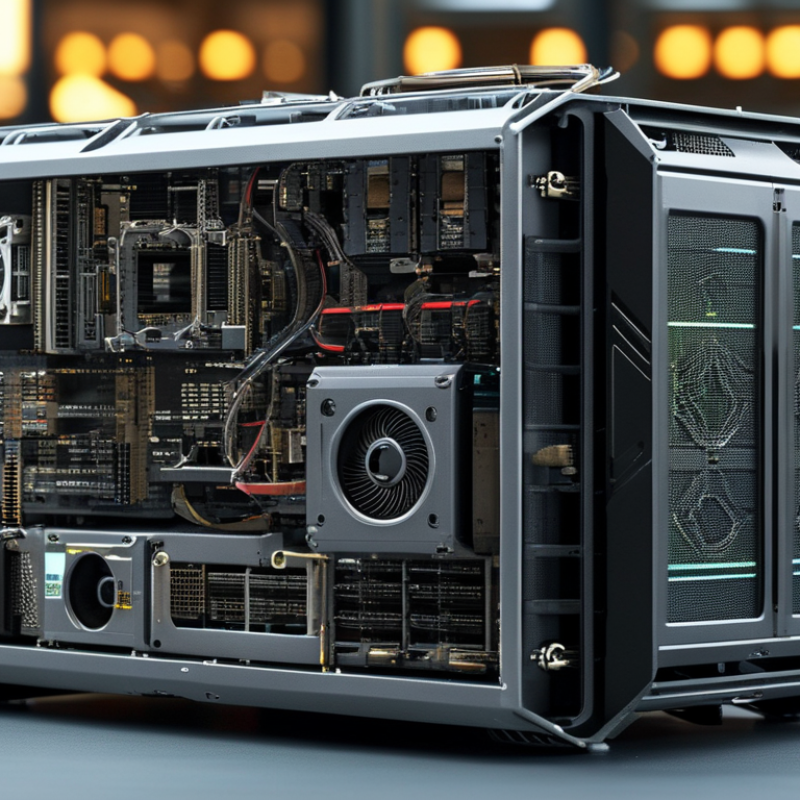
Edge AI servers process data near cameras, machines, vehicles, and sensors instead of sending every signal to a distant cloud. They combine CPUs, accelerators, storage, and networking in compact systems. This design reduces delay. It also limits unnecessary data movement. A factory can inspect a metal surface locally and respond within milliseconds. That matters when a slow decision can stop an entire production line.
China has strong reasons to expand this architecture. The 2024 China Computing Power Development Index Report, published by the China Academy of Information and Communications Technology, estimated China’s computing power industry reached about 2.6 trillion yuan in 2023. Yet centralized computing cannot efficiently serve every mine, port, hospital, and city intersection. Edge servers can support local inference when connectivity is unstable or sensitive data should remain nearby. The International Data Corporation has also identified edge computing as a major infrastructure direction, driven by industrial automation and real-time analytics.
Practical deployment is less perfect. Dust, heat, limited space, and uneven network quality can damage theoretical performance. Engineers must measure latency, power use, model accuracy, and remote maintenance costs together. A smaller model may outperform a larger one when electricity and bandwidth are restricted. This trade-off is often ignored. China’s leading edge AI server manufacturers therefore need more than fast hardware. They need reliable cooling, secure software updates, clear service procedures, and designs suited to regional operating conditions. One overlooked cabinet can expose the real weakness.
Market-neutral comparison of ten common Chinese edge AI server manufacturer profiles, based on widely used enterprise configurations, deployment requirements, and technical specifications. Company and brand names are intentionally omitted.
| Rank | Manufacturer Profile | Typical Form Factor | Typical AI Accelerator Configuration | AI Performance Range | Typical Power Draw | Networking | Typical China Deployment |
|---|---|---|---|---|---|---|---|
| 1 | Profile A: High-Density Inference Specialist | 2U rack server | 4–8 data-center AI accelerators with high-bandwidth memory | 100–500 TOPS or higher, depending on accelerator selection | 1,200–3,000 W | Dual 25GbE or 100GbE uplinks | Large-scale video analytics, smart-city platforms, and centralized edge data rooms |
| 2 | Profile B: Telecom Edge Computing Provider | 1U or 2U short-depth rack server | 1–4 inference accelerators or integrated GPU modules | 50–250 TOPS | 500–1,500 W | 10GbE, 25GbE, and optional 5G-oriented interfaces | 5G multi-access edge computing, industrial connectivity, and low-latency services |
| 3 | Profile C: Industrial Computer Manufacturer | 1U rugged rack or wall-mounted chassis | Compact GPU, NPU, or PCIe inference card | 20–150 TOPS | 250–900 W | Dual 1GbE or 10GbE, with industrial Ethernet options | Factory inspection, machine vision, robotics, and production-line control |
| 4 | Profile D: Video Surveillance AI Provider | 2U rack server or compact edge appliance | Dedicated video inference cards or integrated AI modules | 30–200 TOPS | 300–1,000 W | 1GbE, 10GbE, and PoE aggregation through external switches | Public security, transportation monitoring, campuses, and retail analytics |
| 5 | Profile E: Smart Transportation Platform Builder | Rugged 1U or vehicle-mounted server | Low-power GPU, NPU, or automotive-grade AI module | 10–100 TOPS | 100–600 W | Gigabit Ethernet, CAN, serial interfaces, and wireless backhaul | Intelligent roads, rail systems, fleet management, and roadside perception |
| 6 | Profile F: Energy and Utility Edge Provider | Rugged rack or modular outdoor enclosure | 1–2 industrial AI cards with extended-temperature support | 20–120 TOPS | 200–800 W | 10GbE, fiber uplinks, and redundant network connections | Substation inspection, grid monitoring, renewable-energy sites, and predictive maintenance |
| 7 | Profile G: Retail and Service AI Provider | Compact 1U server or desktop edge appliance | Integrated NPU, entry-level GPU, or low-profile inference card | 5–60 TOPS | 60–350 W | 1GbE or 2.5GbE, with Wi-Fi or cellular options | Checkout analytics, inventory monitoring, customer-flow analysis, and smart stores |
| 8 | Profile H: Healthcare Edge Server Provider | Quiet 1U rack server or compact workstation | Medical-imaging GPU or certified inference module | 10–150 TOPS | 150–900 W | 1GbE or 10GbE with secure hospital network integration | Medical imaging assistance, patient monitoring, hospital automation, and laboratory analysis |
| 9 | Profile I: Autonomous Robotics Server Manufacturer | Compact rugged server or embedded edge computer | Embedded GPU, NPU, or low-latency AI system-on-module | 10–100 TOPS | 80–500 W | Gigabit Ethernet, time-sensitive networking, and industrial I/O | Warehouse robots, agricultural machines, inspection robots, and autonomous equipment |
| 10 | Profile J: Small and Medium Business Edge Provider | Microserver, mini-tower, or compact 1U appliance | Integrated CPU NPU or single low-power inference accelerator | 4–40 TOPS | 40–250 W | 1GbE, 2.5GbE, or optional 10GbE | Local data processing, office security, small factories, and branch-site automation |
Start with the workload. Use your real camera, inspection, counting, or monitoring models. Measure latency, accuracy, and power during continuous operation.
Generic benchmarks can hide practical weaknesses. Ask the supplier to run your models on a sample server. Record response times, power draw, and accuracy after several hours.
Request a factory visit, video inspection, or detailed quality audit. Check board inspection, burn-in testing, traceable components, and repair records. Polished brochures are not enough.
Place the sample near your cameras, sensors, and network equipment. Check fan noise, airflow, enclosure strength, dust protection, and operation in high temperatures. Run a 24-hour or 72-hour stress test.
Confirm secure boot, signed firmware, access controls, patch schedules, and vulnerability reporting. Review compliance documents for your destination market and industry. Security needs practical evidence.
Include electricity, installation, software support, maintenance, spare parts, and future upgrades. A lower purchase price may create higher operating costs. The invoice is only one piece.
Ask for written warranty terms, service commitments, and realistic repair timelines. Check how quickly replacement parts can reach a remote site. Delays can stop an entire production cell.
Be cautious when customization sounds effortless. Require written delivery dates, configuration controls, and acceptance criteria. A small pilot is wise, because specifications rarely reveal every weakness.
Do not focus only on computing speed. Integration time, unstable firmware, dust, heat, and changing data can cost more. My evaluation would still leave room for surprises.
This article explores China’s growing edge AI server industry and explains why these systems are becoming important for real-time computing, data privacy, low-latency processing, and reliable operations close to where data is generated. It introduces the main features of edge AI servers, including compact designs, accelerated computing, flexible deployment, and support for demanding applications such as smart manufacturing, transportation, energy management, healthcare, and retail.
It also presents a practical framework for evaluating a China-based edge ai server manufacturer, covering hardware performance, AI accelerator support, software compatibility, security, customization, energy efficiency, service capability, and total ownership cost. The discussion compares ten leading types of manufacturers by technology strengths and application focus, then provides guidance for selecting the most suitable partner according to workload, deployment environment, scalability, budget, and long-term support requirements.
