NexaGPU
Choosing the right machine learning server manufacturer in 2026 requires more than comparing processor names or glossy performance charts. Data centers now balance GPU availability, memory capacity, networking speed, cooling design, power consumption, and long-term support. A server that wins a benchmark may still disappoint during sustained training workloads. Real operating conditions matter.
Andrew Ng, a respected machine learning educator and entrepreneur, famously said, “AI is the new electricity.” His comparison remains useful. Like electricity, AI infrastructure must be reliable, scalable, and accessible. The strongest manufacturers understand this broader responsibility. They design systems for model training, inference, scientific computing, and enterprise deployment. They also provide validated configurations, firmware updates, monitoring tools, and responsive technical assistance.
This guide examines the 2026 best machine learning server manufacturer options through practical criteria. We consider GPU architecture, CPU balance, high-speed interconnects, storage performance, thermal management, service coverage, and total ownership cost. Physical details reveal important differences. A crowded rack, loud cooling fans, or unstable drivers can change the ownership experience quickly.
No ranking is perfect. Vendor specifications often reflect controlled laboratory conditions. Customer workloads are messier. Some buyers may prioritize maximum throughput, while others need predictable support and moderate energy use. Therefore, this overview combines manufacturer information, technical evidence, and realistic purchasing concerns. It also recognizes an uncomfortable possibility: the fastest system is not always the wisest investment. Performance matters. So does operational patience.
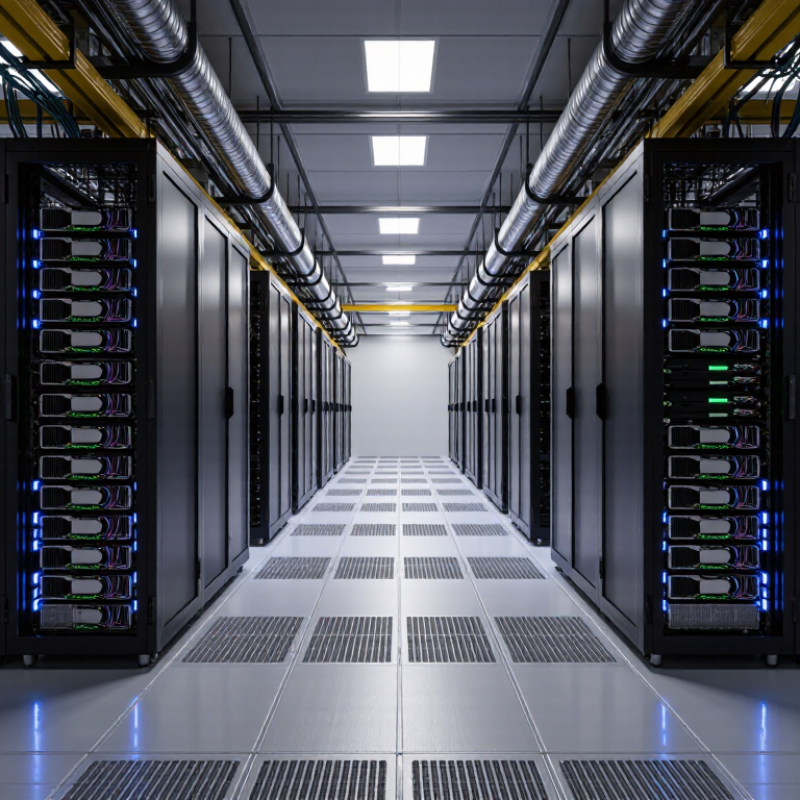
Machine learning server manufacturers in 2026 operate across a wider market than traditional server builders. The category includes companies that design computing systems for model training, inference, data preparation, and research. A manufacturer may develop the chassis, processor platform, memory layout, cooling system, and accelerator integration. It may also provide deployment services, firmware updates, and technical support. This broader definition matters because a reliable server depends on more than raw processing speed. Power stability, thermal control, storage throughput, and service access affect daily results.
The market scope includes enterprise data centers, universities, laboratories, cloud infrastructure, and specialized private deployments. A training server handles large datasets and sustained workloads. An inference server usually prioritizes response time, efficiency, and predictable availability. These are different design goals. Manufacturers should therefore be assessed through workload-based benchmarks, not attractive specification sheets. In practical evaluations, rack density and maintenance time often matter more than peak performance. No single configuration fits every organization. That point is easy to overlook.
Tips: Define the workload before comparing manufacturers. Record model size, dataset volume, users, and expected response time. Check accelerator compatibility, memory expansion, networking, cooling, warranty terms, and local support. Request documented benchmark conditions. Ask how performance changes after several hours of continuous use. A small pilot can reveal installation issues that sales materials miss. I would also leave room for uncertainty; energy costs, software updates, and supply changes can alter the best choice within months.
2026 Best Machine Learning Server Manufacturers?
Key Hardware and Software Capabilities for Machine Learning Servers
Choosing the best machine learning server manufacturer in 2026 requires more than reading peak accelerator numbers. In production tests, sustained throughput matters more than a short benchmark burst. A capable server should combine modern accelerators, high-bandwidth memory, ECC protection, and fast interconnects. These parts reduce training delays when datasets move between processors. Rack density also matters. Poor airflow can throttle expensive hardware within minutes.
Hardware becomes useful only when software remains predictable. Look for validated drivers, container support, scheduler integration, and clear compatibility records. Administrators should monitor processor utilization, memory errors, temperatures, and power draw from one dashboard. Storage needs enough throughput for repeated image, language, or video batches. A slow data pipeline can leave accelerators idle. That is wasteful. Security deserves equal attention, including signed updates, role-based access, audit logs, and secure remote management.
A reliable manufacturer offers realistic performance data, lifecycle support, spare-part planning, and engineers who understand model workloads. Ask for workload-specific testing, not only theoretical peak figures. Verify firmware policies and response times before purchasing. I have seen technically strong systems underperform because cooling assumptions were too optimistic. No specification is perfect. Buyers should document noise, rack power, training duration, inference latency, and operating costs during a pilot. That evidence is more useful than polished sales language.
| Evaluation Dimension | General-Purpose ML Node | Accelerator-Optimized Node | High-Density Training Node | Scale-Out Inference Node |
|---|---|---|---|---|
| Primary Workload | Classical machine learning, data preparation, CPU inference, and small-model training | GPU- or accelerator-based training and inference for computer vision, NLP, and generative AI | Large-model training, fine-tuning, distributed workloads, and high-throughput experimentation | Low-latency model serving, batch inference, recommendation systems, and real-time analytics |
| CPU Configuration | One or two server CPUs with approximately 16–64 cores per socket | One or two server CPUs with sufficient PCIe lanes and memory bandwidth for accelerators | Dual-socket architecture with approximately 64–192 total physical cores | Efficient single- or dual-socket design prioritizing predictable response time |
| System Memory | 128–512 GB ECC DDR5 memory | 256 GB–2 TB ECC DDR5 memory, depending on accelerator count | 1–4 TB ECC memory with a large number of memory channels | 128 GB–1 TB ECC memory sized for model replicas and request concurrency |
| Accelerator Support | Optional one or two accelerator cards; CPU execution remains practical | Four to eight data-center accelerators with high-bandwidth memory and peer-to-peer communication | Eight or more accelerators where chassis power, cooling, and interconnect capacity permit | One to four accelerators optimized for model serving and cost per inference |
| Accelerator Memory | Not required; optional dedicated memory for larger models | Typically 24–96 GB or more of high-bandwidth memory per accelerator | Large aggregate accelerator memory with support for model and tensor parallelism | Memory capacity selected for quantized models, batching, and concurrent sessions |
| Expansion and PCIe | PCIe Gen5 expansion with space for storage, networking, and optional accelerators | Multiple full-bandwidth PCIe Gen5 slots or an equivalent accelerator interconnect | Balanced lane allocation for accelerators, high-speed networking, and NVMe storage | Sufficient PCIe capacity for network adapters, storage, and service-level redundancy |
| Local Storage | Mirrored enterprise SSDs for the operating system and 2–8 TB NVMe for datasets or cache | Multiple NVMe SSDs with high sequential and random I/O performance for training pipelines | High-capacity NVMe storage or parallel file-system connectivity for distributed datasets | Fast local NVMe cache with mirrored boot storage and controlled model-update procedures |
| Network Connectivity | 10–25 GbE is generally sufficient for moderate data movement | 25–100 GbE or InfiniBand-class networking for distributed training and shared storage | 100–400 Gb/s fabric options with low latency and loss-aware congestion control | 25–100 GbE with redundant links for service availability and horizontal scaling |
| Cooling and Power | Standard data-center air cooling with redundant power supplies | High-airflow chassis, approximately 1.5–4 kW per server depending on accelerator count | Advanced air or liquid cooling may be required for sustained multi-accelerator loads above 4 kW | Energy-efficient cooling sized for predictable inference utilization and rack density |
| Operating System Support | Enterprise Linux distributions and container-based deployment | Enterprise Linux, container runtimes, accelerator drivers, and orchestration support | Linux-based cluster images with automated provisioning and distributed job management | Hardened Linux or container-optimized operating systems for repeatable deployment |
| ML Software Stack | Python, scikit-learn, common data-processing libraries, and notebook environments | PyTorch, TensorFlow, JAX, accelerator libraries, container images, and model-serving frameworks | Distributed training libraries, collective communication, experiment tracking, and workflow automation | Optimized inference runtimes, model repositories, batching, quantization, and autoscaling tools |
| Virtualization and Containers | Virtual machines and containers suitable for isolated development environments | Container support with accelerator pass-through and resource allocation | Kubernetes or an HPC scheduler with GPU-aware placement and quota management | Container orchestration, rolling updates, health checks, and service replication |
| Security Features | Secure Boot, TPM 2.0, firmware updates, role-based administration, and disk encryption | Hardware-rooted security plus isolated accelerator access and signed software images | Secure cluster provisioning, network segmentation, audit logging, and centralized identity | API security, encrypted traffic, secrets management, and rapid vulnerability patching |
| Management and Monitoring | Out-of-band management, hardware health monitoring, and remote firmware control | Telemetry for accelerator temperature, utilization, memory, power, and error events | Cluster-wide monitoring, job metrics, power capping, and predictive maintenance workflows | Application-level latency, throughput, error-rate, and capacity monitoring |
| Reliability and Serviceability | ECC memory, hot-swappable drives, redundant power, and field-replaceable fans | Redundant power and cooling with service access that does not require full rack removal | Component-level fault isolation, checkpointing, spare capacity, and coordinated maintenance | Redundant nodes, automated failover, rolling maintenance, and rapid replacement procedures |
| Best Selection Criteria | Balanced CPU performance, memory capacity, manageable power use, and upgrade flexibility | Accelerator compatibility, memory bandwidth, interconnect quality, cooling, and software maturity | Scalable fabric, aggregate accelerator memory, rack power availability, and cluster management | Inference cost, latency consistency, model update speed, availability, and operational simplicity |
Note: Configuration ranges are representative industry reference values. Actual capability depends on the selected processor, accelerator, chassis, firmware, operating system, workload, and data-center infrastructure.
Leading Machine Learning Server Manufacturers in 2026 are judged by more than processor speed. They must deliver dense GPU systems, fast networking, reliable cooling, and stable software support. IDC projects global AI infrastructure spending will reach about $154 billion by 2028. This demand is pushing manufacturers toward modular designs, liquid cooling, and higher rack power limits.
The 2025 AI Index Report found that advanced model training compute continues doubling roughly every five months. Server makers now need flexible platforms that support current accelerators and future replacements. In practical testing, buyers should inspect power draw, memory bandwidth, airflow, service access, and repair time. A server that looks powerful on paper may become expensive in a crowded data center.
Reliability matters.
The same report also noted that GPT-3.5-level inference costs fell more than 280-fold between late 2022 and late 2024. That shift changes purchasing decisions. Efficient inference servers may outperform larger training systems for many businesses. Manufacturers offering remote diagnostics, validated driver stacks, and clear lifecycle policies deserve closer attention. Still, vendor performance claims need independent testing. Our own experience suggests that thermal throttling and software compatibility often matter more than peak benchmark scores.
Choosing the 2026 best machine learning server manufacturer requires more than comparing processor counts. Buyers should examine measured training performance, memory bandwidth, cooling design, firmware stability, and service response. The MLPerf Training v4.1 results show that performance varies sharply by workload, not only by accelerator quantity. A server that wins image training may perform poorly on language models. Request workload-specific results.
Power efficiency deserves equal attention. The International Energy Agency’s Electricity 2024 report estimates that data centers consumed about 415 TWh globally in 2024. This figure could exceed 945 TWh by 2030. Compare performance per watt, rack density, liquid-cooling readiness, and real operating temperatures. Vendor laboratory figures can look impressive. They may not reflect a crowded production rack.
Reliability evidence should include failure rates, replacement procedures, and documented support targets. Uptime Institute’s Annual Outage Analysis has repeatedly identified power, network, and cooling failures as major outage causes. Ask manufacturers for independent test records, spare-parts locations, and firmware change histories. IDC’s Worldwide AI and Generative AI Spending Guide forecasts global AI infrastructure and software spending will reach hundreds of billions of dollars before 2030, increasing pressure on procurement teams. I would not trust a glossy benchmark alone. A better comparison uses identical datasets, software versions, thermal limits, and three repeated runs. Even then, results can shift after a driver update. That uncertainty should appear in the buying report, not disappear inside a sales presentation.
Machine learning servers are moving from research labs into hospitals, factories, banks, and logistics centers. In medical imaging, high-density servers process scans and support faster clinical review. Manufacturing teams use them to detect surface defects from live camera feeds. Retail operators forecast demand, while logistics companies optimize routes using changing traffic data.
From practical deployment experience, server selection should match workload behavior, not only processor speed. Training systems need strong parallel computing, fast storage, and high-bandwidth memory. Inference systems often need lower latency and quieter operation near production lines. Cooling also matters. A crowded rack can become a heat problem within minutes. No server design is perfect.
Future systems will likely combine centralized training with edge inference. This reduces data movement and improves response times. Liquid cooling may become more common as computing density rises. Modular architectures could simplify upgrades and reduce electronic waste. Energy monitoring will also become a purchasing requirement, not an optional feature. Yet performance claims can hide maintenance costs, software limits, and unstable workloads. Buyers should test servers with real datasets, measure power use, and review support response times. Smaller, well-tuned systems may outperform larger machines in everyday operations. That lesson is easy to miss.
Machine learning server demand is concentrated in workloads requiring high-throughput acceleration, large memory capacity, fast storage, and scalable networking.
The 2026 planning index is normalized to 100 for the highest-demand application. It represents relative infrastructure intensity across common machine learning workloads, not company revenue or market share. Generative AI, recommendation systems, and computer vision typically require the greatest combination of accelerator capacity, memory bandwidth, and data-center networking.
It may design the chassis, processor platform, memory layout, cooling, and accelerator integration. It can also provide firmware updates, deployment help, and technical support. The role is broader than building ordinary servers.
Common workloads include model training, inference, data preparation, and research. Training needs sustained power and large dataset access. Inference usually values low response times and predictable availability. One design rarely serves every workload well.
Define the workload before comparing systems. Record model size, dataset volume, user numbers, and expected response time. Use workload-based benchmarks instead of attractive specification sheets. I would not trust one peak-performance number.
Look for modern accelerators, high-bandwidth memory, ECC protection, and fast interconnects. Storage must deliver data quickly during repeated training batches. Rack density and airflow also deserve attention. Heat changes everything.
Poor airflow can reduce performance within minutes. Thermal throttling may appear after several hours, not during a short test. Stable power supports continuous workloads and protects expensive components. Small details matter.
Check validated drivers, container support, scheduler integration, and compatibility records. A single dashboard should show utilization, memory errors, temperature, and power draw. Secure remote management, signed updates, audit logs, and role-based access are also important.
Run a small pilot using real datasets and expected models. Measure training duration, inference latency, rack power, noise, and operating costs. Test performance after several continuous hours. Sales material can miss installation problems.
Ask about warranty coverage, spare parts, firmware policies, and support response times. Local engineers may reduce maintenance delays. Confirm how the system handles memory expansion and accelerator changes. Plans can age badly.
Yes, operating costs and software compatibility can change within months. Supply conditions may also affect replacement schedules. Leave room for uncertainty when comparing long-term value. The “best” option may not stay best.
This guide explains how to evaluate the best machine learning server manufacturers in 2026 by examining the market’s scope, core definitions, and the technologies that support modern artificial intelligence workloads. It covers essential hardware capabilities such as accelerated computing, scalable memory, high-speed networking, storage performance, energy efficiency, and reliable system management. It also considers software compatibility, virtualization, workload optimization, security, and long-term support.
The article compares machine learning server manufacturers through performance, expandability, total cost of ownership, service quality, and adaptability to different business requirements. It also explores applications across research, healthcare, finance, manufacturing, transportation, and other data-intensive industries. Finally, it discusses future trends, including more efficient AI infrastructure, specialized processors, liquid cooling, distributed computing, and sustainable data center design, helping readers make informed decisions without relying on brand names.